Why does the Toyota bZ3X suit buyers in Russia?
For a cold climate the bZ3X brings a standard heat pump, which reduces the range lost to cabin heating, and a liquid-cooled LFP battery. Its 5-seat compact SUV body, Toyota badge and CLTC ranges of 430 to 610 km make it a practical city and suburban EV for dealers building an electric line-up. Buyers can mix 2025 and 2026 model years in one order, and the 2026 LiDAR trims add city and highway navigate-on-assist.
- Heat pump standard on every trim.
- Battery options of 50.03, 58.37 and 67.92 kWh, all LFP.
- Left-hand drive, matching Russia's right-hand traffic.
- 6 kW vehicle-to-load on the 2026 model year; see the 2026 520 Pro+ LiDAR page.
What import rules should you check before ordering?
Vehicles entering Russia must comply with the EAEU technical regulation TR CU 018/2011 on the safety of wheeled vehicles. In practice that means a type approval or an individual vehicle design safety certificate (SBKTS) before an electronic vehicle passport (EPTS) can be issued.
Russia also charges a utilization (recycling) fee on imported passenger cars. The calculation method changed in late 2025 to take engine power into account, and electric vehicle rates changed again from 1 January 2026.
The utilization fee, customs duty and certification rules change often. Ask your customs broker for the current figures for a 150 kW or 165 kW electric car before you order. We do not quote Russian fees.
The car uses the Chinese GB/T charging standard, which is also present in Russia, though many sites use CCS2; see our charging conversion guide. Navigation and voice are Chinese-market, covered in the infotainment guide.
How is the bZ3X shipped to Russia?
Depending on the destination, cars can go by sea to ports such as Vladivostok or Novorossiysk, by Ro-Ro or in 40ft containers, or overland by truck or rail. The route, freight and delivery date are confirmed for each order.
What documents come with each car?
Each car ships with the commercial invoice, packing list, transport document, Chinese export clearance papers and the vehicle data your certification body needs for SBKTS. See our EV export documents checklist. We send photo or video confirmation at every milestone.

2026 · Electric SUV · LHD
Toyota bZ3X 2026 520 Pro+ LiDAR
- Range
- 520 km
- Battery
- 58.37 kWh
- Power
- 150 kW
Export price
Price on request
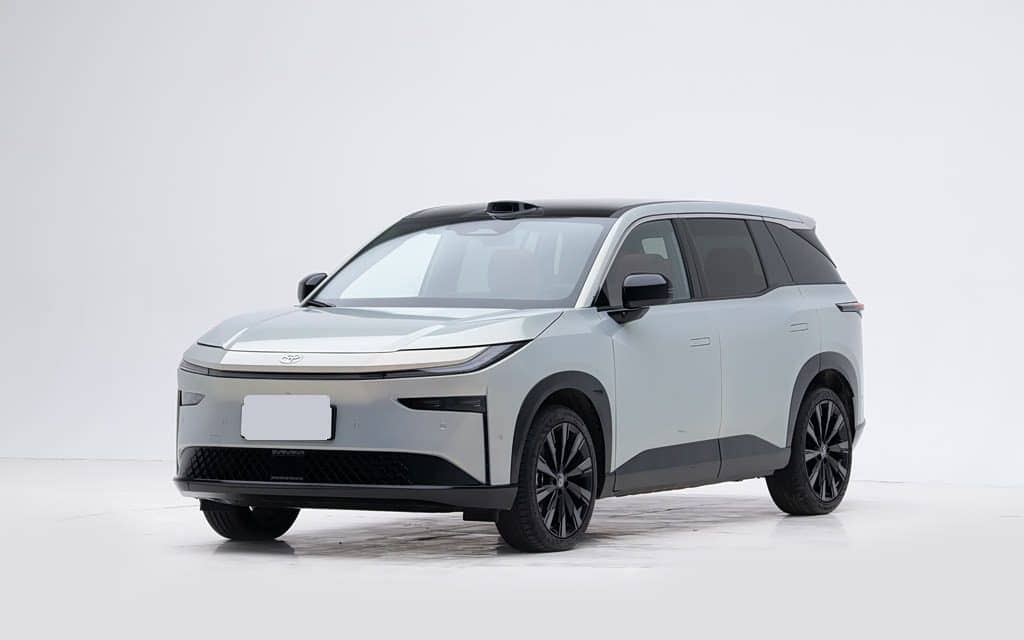
2025 · Electric SUV · LHD
Toyota bZ3X 2025 610 Max
- Range
- 610 km
- Battery
- 67.92 kWh
- Power
- 165 kW
Export price
Price on request

2026 · Electric SUV · LHD
Toyota bZ3X 2026 430 Air
- Range
- 430 km
- Battery
- 50.03 kWh
- Power
- 150 kW
Export price
Price on request
How to get a FOB/CIF quote for Russia
Send model year, trims, colours, quantity and delivery point. Dealers testing demand can start with one car, and larger buyers can see volume terms on the fleet solutions page. For lower-cost stock, ask about used and nearly new bZ3X units.
Questions buyers ask
Does the bZ3X need an SBKTS to be registered in Russia?
Vehicles imported into the EAEU must meet TR CU 018/2011. For individual imports this is usually done through an SBKTS issued by an accredited body, which is needed before an electronic passport (EPTS). We supply vehicle data and export documents; your certification body and broker handle the Russian side.
How much is the utilization fee on a bZ3X?
We do not quote it, because the fee depends on importer type and power and has changed several times, including for electric cars from 1 January 2026. The bZ3X has 150 kW (204 PS), or 165 kW (224 PS) on the 610 Max. Give those figures to your customs broker for a current calculation.
How does the bZ3X handle Russian winters?
Every trim has a heat pump and a liquid-cooled LFP battery, which help with cabin heating and battery temperature control. Like all EVs, range falls in deep cold, so plan routes with margin. We cannot give winter range figures; the manufacturer publishes CLTC ranges of 430, 520 and 610 km.